How to Tell If Your Startup Idea Is Worth Pursuing: A 5-Minute Framework
Every founder has been there. You're lying in bed at 2 AM, struck by what feels like the best idea you've ever had. Your heart races. You start mentally designing the UI. You imagine the TechCrunch headline. You can almost hear the Stripe notifications.
Then morning comes, and you're not sure anymore.
The gap between "this feels like a good idea" and "this is actually a good idea" is where most startups die. The problem is that most founders don't have a systematic way to bridge that gap. They rely on gut feelings, conversations with friends, or the echo chamber of Twitter.
Here's a 5-minute framework that changes that. It's based on patterns we've observed from analyzing thousands of successful and failed SaaS products on NeedSonar.
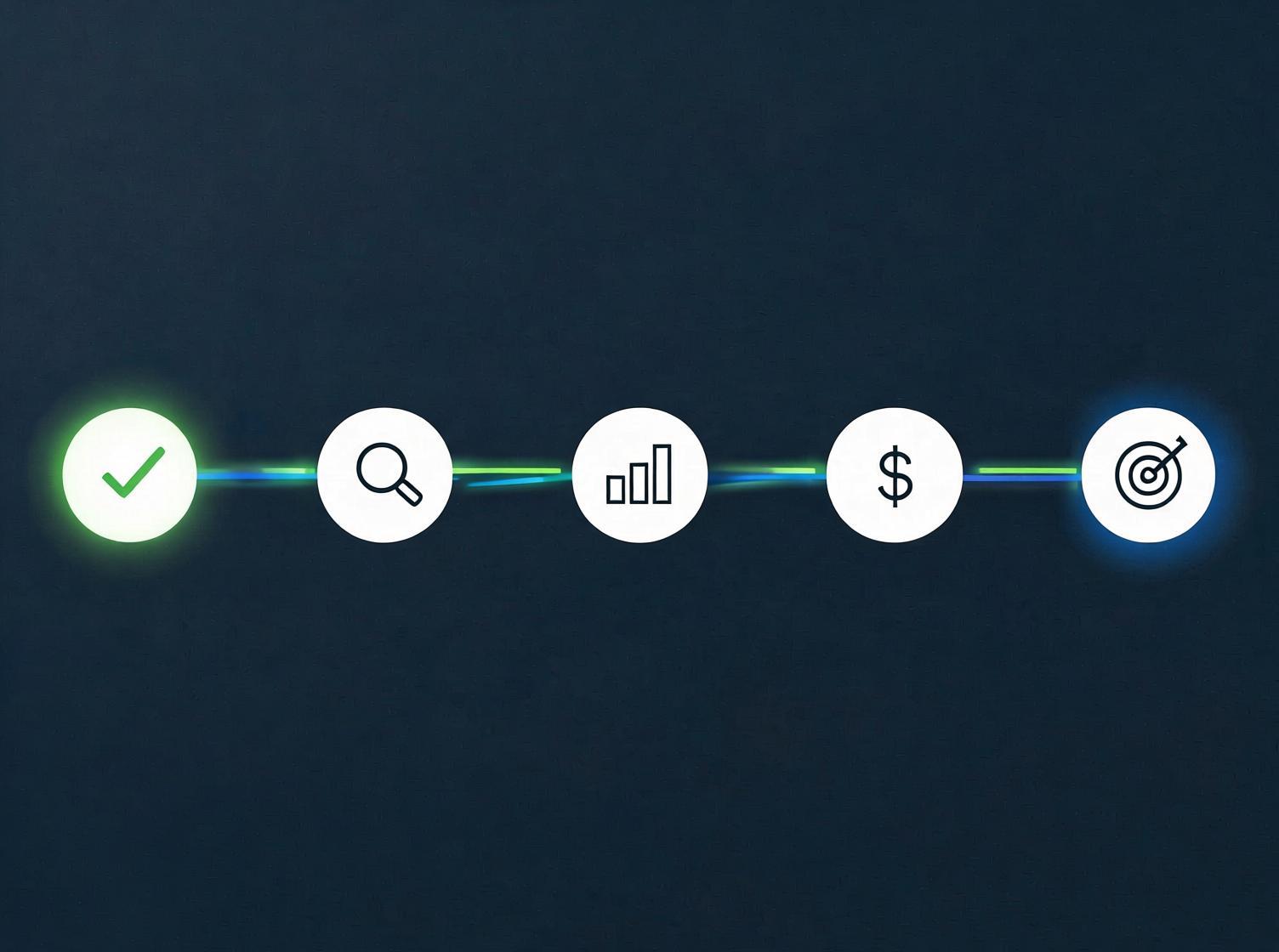
The 5-Question Framework
For each question, score your idea from 0 to 3:
- 0 = No evidence / complete guess
- 1 = Weak evidence / anecdotal
- 2 = Moderate evidence / some data
- 3 = Strong evidence / clear market signal
Question 1: Are People Already Complaining About This Problem?
This is the most important question. If people aren't already vocalizing their frustration with this problem, it's probably not painful enough to build a business around.
Score 0: You've never seen anyone complain about this. It's purely your own observation. Score 1: You've heard a few people mention it in passing, but never with strong emotion. Score 2: You can find regular complaints across multiple forums or communities. Score 3: There are entire Reddit threads, HN discussions, and Twitter threads dedicated to this problem. People use emotional language: "I'm so tired of…", "I would pay anything for…", "This is driving me crazy."Question 2: Are People Already Trying to Solve This (Badly)?
The best signal that a problem is worth solving is that people are already trying to solve it — with spreadsheets, with duct-tape workflows, with a combination of three tools that don't talk to each other.
Score 0: No one seems to be doing anything about this problem. Score 1: People occasionally mention workarounds, but they seem satisfied. Score 2: People have cobbled together partial solutions, but express frustration with the status quo. Score 3: There's a thriving ecosystem of half-baked solutions, manual processes, and people explicitly saying "someone should build a proper tool for this."Question 3: Is the Market Big Enough?
A problem that affects 100 people, no matter how painful, is not a business. It's a feature request. A problem that affects 100,000 people is a market.
Score 0: You have no idea how many people have this problem. Score 1: You can estimate the market size, but it's under 10,000 people. Score 2: The total addressable market is between 10,000 and 100,000 people. Score 3: The market is clearly over 100,000 people and growing.Question 4: Is the Competition Weak or Non-Existent?
Competition is not a bad thing — it validates the market. But if the market is already saturated with excellent, well-funded solutions, your window of opportunity is narrow.
Score 0: There are 5+ excellent, well-funded competitors dominating the space. Score 1: There are 3-5 good competitors, but they all have notable weaknesses. Score 2: There are 1-2 competitors, but they're clearly not meeting user needs well. Score 3: There are essentially no good solutions. The market is wide open.Question 5: Can You Reach Your Target Customers?
Having a great product is useless if you can't get it in front of the people who need it. Distribution matters as much as product.
Score 0: You have no idea how to reach your target customers. Score 1: You have a vague idea but no concrete channels. Score 2: You know specific communities, platforms, or channels where your customers hang out. Score 3: You already have access to distribution channels — an existing audience, a community you're part of, or clear SEO/content opportunities.The Scoring
Add up your scores:
- 0-5: Kill this idea. It's not ready. Go back to listening.
- 6-9: Proceed with caution. The idea has potential, but there are significant gaps. Do more research before building.
- 10-12: This is worth serious exploration. The signals are strong enough to justify building a landing page and talking to potential customers.
- 13-15: Green light. There's strong evidence of market demand, weak competition, and reachable customers. Start building.
How NeedSonar Maps to Each Question
This framework is powerful on its own, but it becomes even more actionable when you have data to feed into each question. Here's how NeedSonar helps:
For Question 1 (Are people complaining?): NeedSonar's crawler scans Reddit, Hacker News, V2EX, and other platforms to surface real complaints. Instead of manually searching, you get a feed of verified pain points with emotion intensity scores. For Question 2 (Are people trying to solve this?): NeedSonar's analysis identifies workarounds and partial solutions people are already using. You can see the "duct-tape ecosystem" around a problem before you build. For Question 3 (Is the market big enough?): NeedSonar estimates market size by analyzing the volume and frequency of complaints across platforms, giving you a data-driven sense of how many people are affected. For Question 4 (Is competition weak?): NeedSonar's competitive analysis extracts existing players, their weaknesses, and market gaps — so you can see exactly where the opportunity lies. For Question 5 (Can you reach customers?): By showing you exactly which communities and platforms are discussing the problem, NeedSonar points you directly to your distribution channels.The Bottom Line
The 5-minute framework won't guarantee success — nothing can. But it will help you avoid the most common and costly mistake in entrepreneurship: spending months building something nobody wants.
The best ideas aren't the ones that excite you the most. They're the ones that score highest on this framework. And if you're honest with yourself, the difference between those two things is often the difference between failure and success.